Zucchini Noodles with Pesto
Highlighted under: Wholesome & Clean Eating
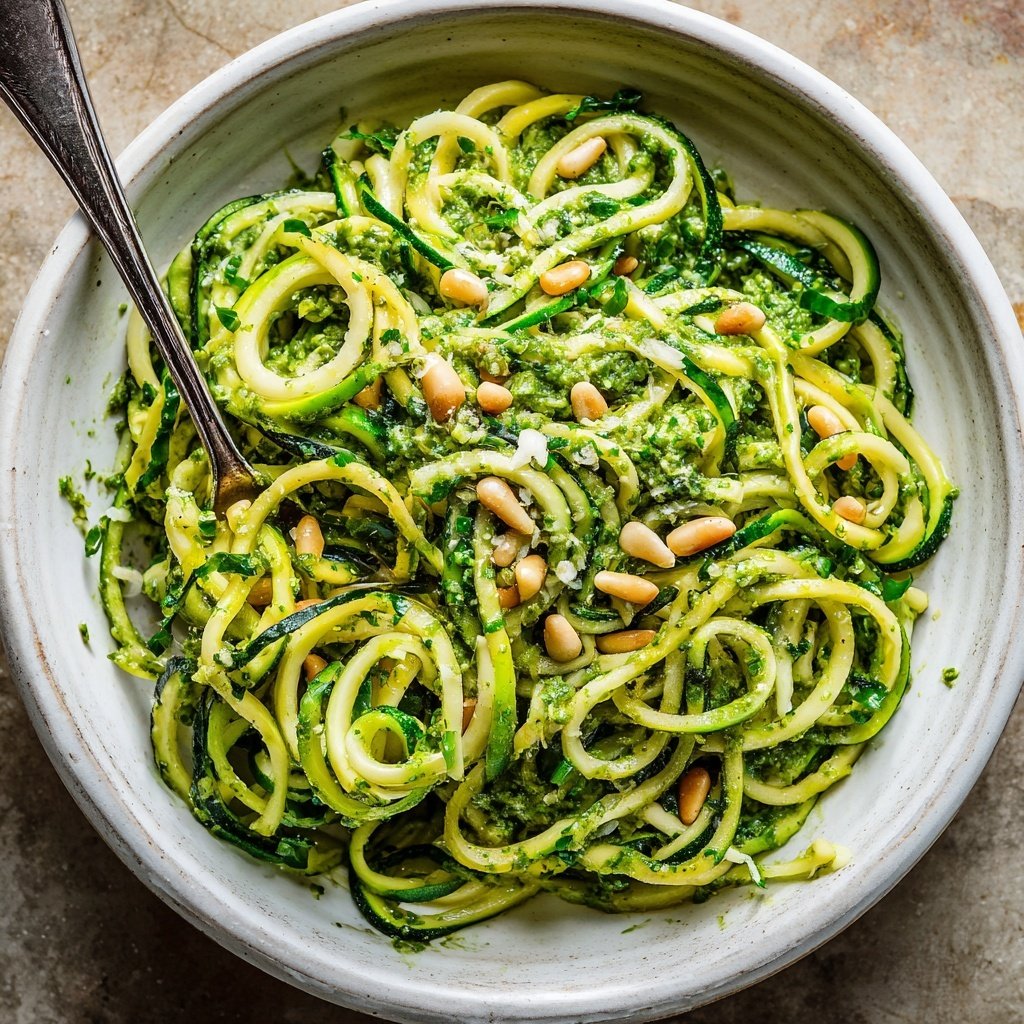
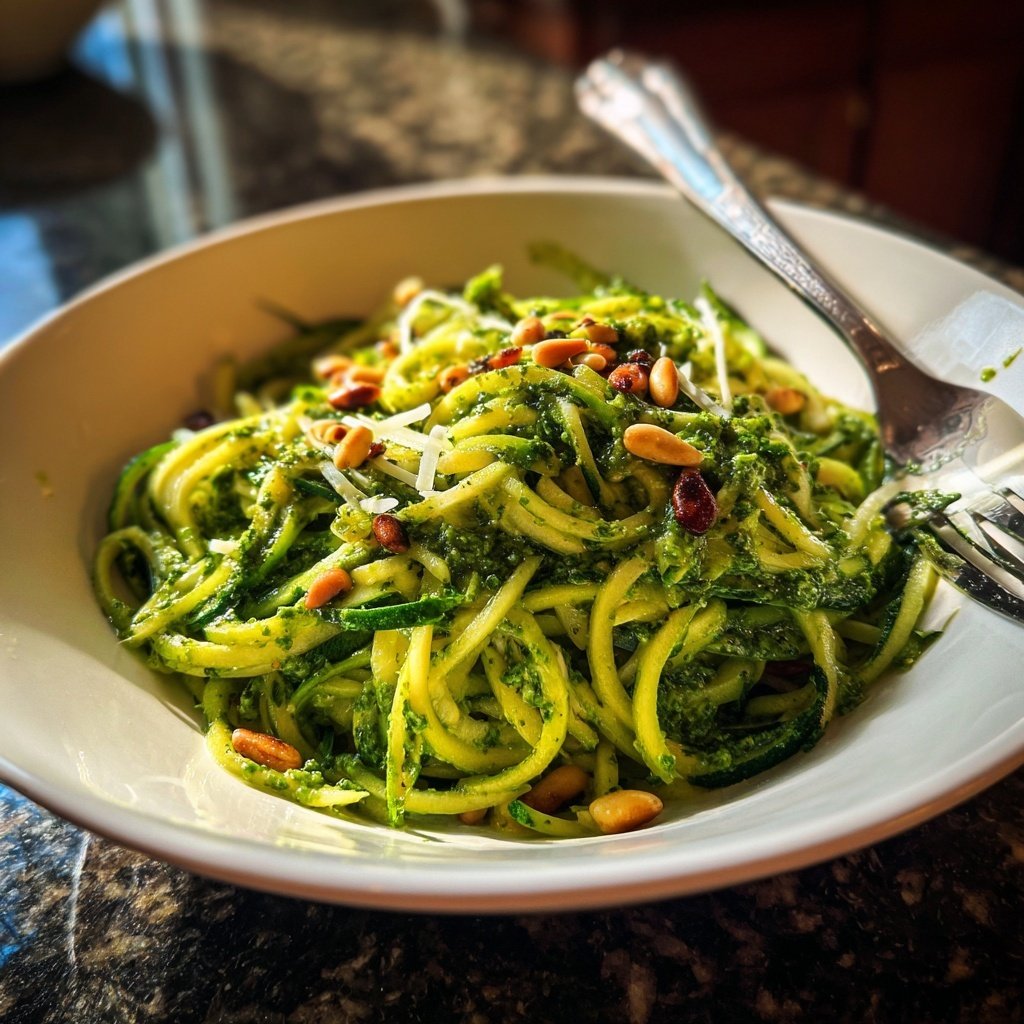
I love making Zucchini Noodles with Pesto because they offer a fresh and light alternative to traditional pasta. This dish captures the vibrant flavors of summer, and it's so quick to prepare! The combination of zoodles and homemade pesto is not only nutritious but also incredibly satisfying. Whenever I'm in the mood for something healthy yet delicious, this recipe never disappoints. Plus, I appreciate that it's a great option for anyone looking to reduce their carb intake without sacrificing taste.
When I first tried making Zucchini Noodles with Pesto, I was amazed at how simply spiralizing fresh zucchini transformed the dish. I typically prepare the pesto using fresh basil, garlic, pine nuts, and olive oil, which really elevates the flavors. Plus, I find that tossing the zoodles quickly in a hot pan helps them retain a slight crunch while soaking up the delicious pesto.
One trick I've discovered is to salt the zucchini noodles before cooking them; this releases excess moisture and prevents the dish from becoming soggy. I often top it off with a sprinkle of Parmesan cheese for that extra layer of flavor. It's a meal that feels indulgent yet guilt-free!
Why You'll Love This Recipe
- Fresh, garden-fresh flavors that brighten your plate
- Simple ingredients that come together in minutes
- A health-conscious alternative to traditional pasta
Understanding Zucchini Noodles
Zucchini noodles, or zoodles, are a fantastic way to add volume and nutrition to your meals without the carbs associated with traditional pasta. When spiralizing, make sure to select medium-sized zucchinis as they have a higher water content and create the perfect noodle-like strands. A spiralizer works best for this task, but if you don’t have one, a vegetable peeler can also yield thin strips that work in a pinch. Just be mindful that using a peeler may take a bit longer.
Once you've created the zoodles, it's important to address their water content. Zucchinis have a high moisture level, which can lead to a watery dish if not handled properly. After spiralizing, consider salting the zoodles lightly and letting them drain in a colander for about 15 minutes. This step draws out excess water and enhances the overall texture of the noodles, ensuring they remain slightly crunchy after cooking.
Pesto Perfection
Homemade pesto showcases fresh basil's bright and aromatic qualities, playing a central role in this dish. The quality of your ingredients is crucial; using fresh basil makes a significant difference in flavor. As you prepare the pesto, it's vital to pulse the basil and garlic first before adding the oil, allowing the ingredients to distribute evenly. Also, opt for a high-quality Parmesan cheese, as it adds a creamy and nutty profile that enriches the sauce.
If you're looking to customize your pesto, consider experimenting with nuts. While pine nuts are traditional, walnuts or almonds can provide a delightful twist at a fraction of the cost. Additionally, for those with dietary restrictions, nutritional yeast can serve as an excellent dairy-free substitute for Parmesan cheese, providing that cheesy flavor without the lactose. Always taste and adjust the seasoning as you blend; a little extra salt can elevate the flavor dramatically.
Serving Suggestions and Storage
Serving Zucchini Noodles with Pesto can be an opportunity to get creative. These noodles pair beautifully with grilled chicken, shrimp, or even cherry tomatoes for a pop of color. Consider tossing in a handful of sun-dried tomatoes or olives for added depth, or topping with toasted nuts for extra crunch. The dish is best served fresh, but it can also be enjoyed cold as a pasta salad, perfect for summertime meals.
If you're making a large batch of zoodles or pesto, both can be stored for later use. The zucchini noodles can be kept in an airtight container in the fridge for up to 3 days, but it’s best to undercook them slightly to keep their texture. Homemade pesto can last in the refrigerator for up to a week or can be frozen for longer storage. Consider freezing pesto in ice cube trays for easy portioning—perfect for quick meals anytime you need a burst of flavor.
Ingredients
Ingredients
For the Zucchini Noodles
- 2 medium zucchinis
- 1 tablespoon olive oil
- Salt and pepper to taste
For the Pesto
- 2 cups fresh basil leaves
- 2 cloves garlic
- 1/4 cup pine nuts
- 1/4 cup Parmesan cheese, grated
- 1/2 cup olive oil
- Salt and pepper to taste
Instructions
Instructions
Make the Pesto
In a food processor, combine the basil, garlic, pine nuts, and Parmesan cheese. Pulse until finely chopped. While the processor is running, slowly add the olive oil until the mixture is smooth. Season with salt and pepper to taste.
Prepare the Zucchini Noodles
Spiralize the zucchinis using a spiralizer or a vegetable peeler to create noodle-like strands. Heat the olive oil in a large skillet over medium heat.
Cook the Zucchini
Add the zucchini noodles to the skillet and sauté for about 3-5 minutes, or until just tender. Avoid overcooking to keep them slightly crunchy.
Combine and Serve
Remove from heat and toss the zucchini noodles with the prepared pesto. Adjust seasoning with salt and pepper, then serve immediately with extra Parmesan cheese if desired.
Pro Tips
- For added protein, consider adding grilled chicken or shrimp to this meal. Additionally, you can customize the pesto by adding sun-dried tomatoes or using walnuts instead of pine nuts for a different flavor profile.
Key Cooking Techniques
When cooking the zucchini noodles, avoid high heat as it can quickly turn them mushy. Instead, medium heat is ideal, allowing you to sauté them gently and retain their crunch. You're looking for a slight translucent sheen—this indicates they're cooked but still firm. Stir occasionally to ensure even cooking, and remember that they'll continue to soften from residual heat after it's removed from the stove.
If you're preparing this dish for a gathering, make-ahead options can save time. Prepare the pesto a day in advance and store it in the fridge. Just cover the surface with a thin layer of olive oil to prevent oxidation and browning. For the zoodles, you can spiralize them in advance too, but store them with a paper towel in the container to absorb excess moisture until you're ready to cook.
Troubleshooting Common Issues
A common issue with zoodles is that they can become soggy, often due to overcooking or excess moisture. If you find that your zoodles are too watery even after draining, you can try sautéing them longer to evaporate some of the moisture. However, be careful not to overdo it—keeping them crunchy is the key to a satisfying bite!
If your pesto turns out too thick or not flavorful enough, you can adjust its consistency and taste by adding a splash more olive oil or a squeeze of lemon juice. Lemon brightens the flavors and balances the richness of the nuts and cheese. Always blend and taste as you go; this ensures you tailor the final product to your liking without any guesswork.
Questions About Recipes
→ Can I use pre-made pesto for this recipe?
Absolutely! Using store-bought pesto can save time, but fresh homemade pesto really enhances the flavor of the dish.
→ How can I store leftovers?
Store any leftover zucchini noodles in an airtight container in the refrigerator for up to 2 days. Reheat gently to avoid overcooking.
→ Are zucchini noodles gluten-free?
Yes, zucchini noodles are naturally gluten-free, making them an excellent alternative for those with gluten sensitivities.
→ Can I freeze zucchini noodles?
It's best to consume zucchini noodles fresh. If you must freeze them, blanch them first and then freeze in an airtight container, but they may lose some texture.
Zucchini Noodles with Pesto
Created by: The Recipesbyleo Team
Recipe Type: Wholesome & Clean Eating
Skill Level: Beginner
Final Quantity: 2 servings
What You'll Need
For the Zucchini Noodles
- 2 medium zucchinis
- 1 tablespoon olive oil
- Salt and pepper to taste
For the Pesto
- 2 cups fresh basil leaves
- 2 cloves garlic
- 1/4 cup pine nuts
- 1/4 cup Parmesan cheese, grated
- 1/2 cup olive oil
- Salt and pepper to taste
How-To Steps
In a food processor, combine the basil, garlic, pine nuts, and Parmesan cheese. Pulse until finely chopped. While the processor is running, slowly add the olive oil until the mixture is smooth. Season with salt and pepper to taste.
Spiralize the zucchinis using a spiralizer or a vegetable peeler to create noodle-like strands. Heat the olive oil in a large skillet over medium heat.
Add the zucchini noodles to the skillet and sauté for about 3-5 minutes, or until just tender. Avoid overcooking to keep them slightly crunchy.
Remove from heat and toss the zucchini noodles with the prepared pesto. Adjust seasoning with salt and pepper, then serve immediately with extra Parmesan cheese if desired.
Extra Tips
- For added protein, consider adding grilled chicken or shrimp to this meal. Additionally, you can customize the pesto by adding sun-dried tomatoes or using walnuts instead of pine nuts for a different flavor profile.
Nutritional Breakdown (Per Serving)
- Calories: 220 kcal
- Total Fat: 22g
- Saturated Fat: 3g
- Cholesterol: 10mg
- Sodium: 200mg
- Total Carbohydrates: 8g
- Dietary Fiber: 2g
- Sugars: 5g
- Protein: 6g